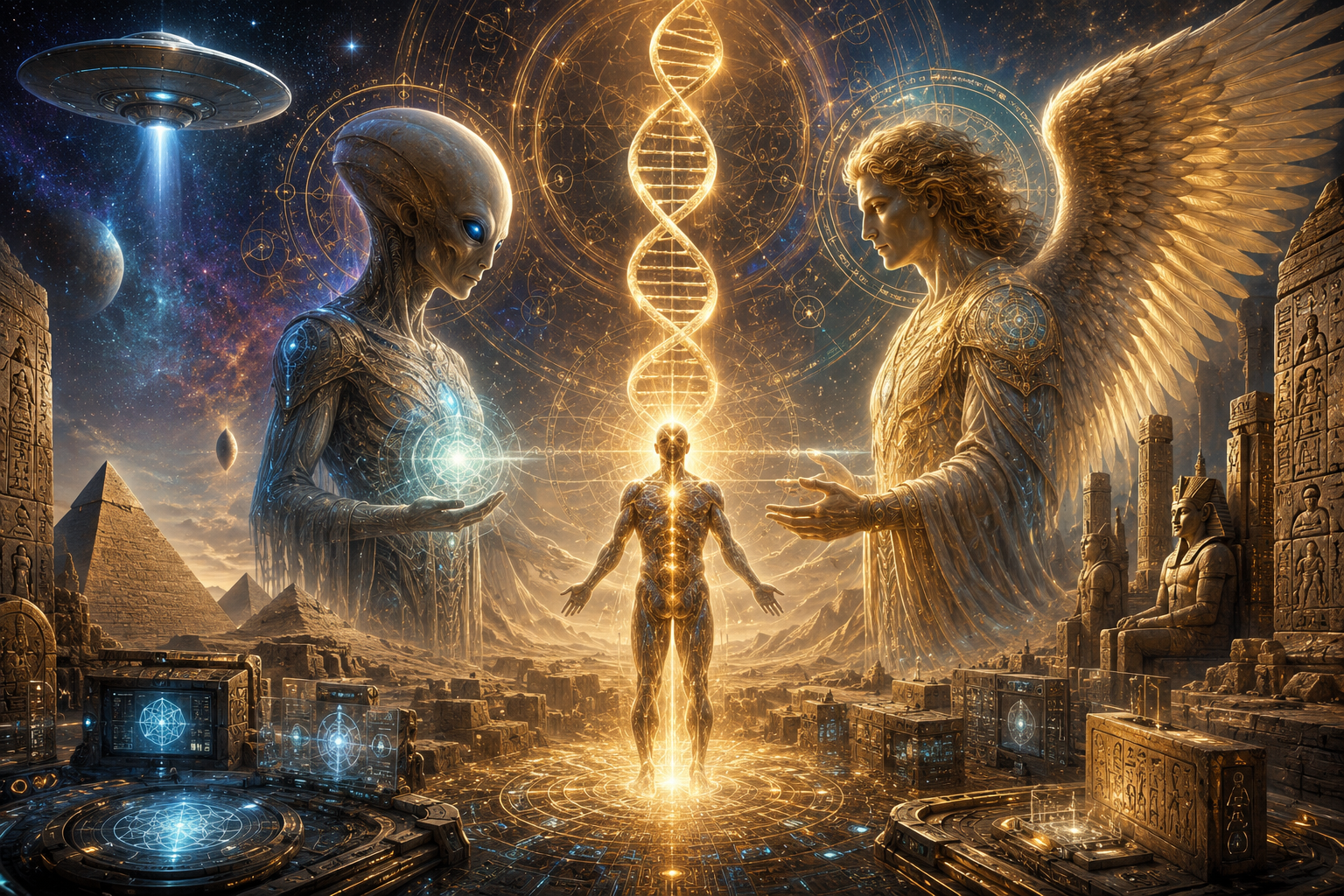
Corruption, Hybridization, Forbidden Knowledge, and the Return of Ancient Wickedness
Jesus Christ gave a solemn warning concerning the final generation before His return:
“And as it was in the days of Noe, so shall it be also in the days of the Son of man.” — The Gospel of Luke “Likewise also as it was in the days of Lot…” — The Gospel of Luke
These statements are among the most mysterious prophetic declarations in Scripture. Christ did not merely say that the last days would be sinful. Human history has always been sinful. Instead, He pointed specifically to two ancient periods: the world before the Flood and the cities of Sodom and Gomorrah.
The implication is profound. To understand the nature of the last days, one must understand what truly happened in the days of Noah and the days of Lot.
This study examines those periods through the lens of The Book of Genesis, The Book of Enoch, The Book of Jubilees, and the teachings of Jesus in the Gospels. It explores themes of corruption, genetic hybridization, forbidden technology, transhuman ambition, and the rebellion against the created order of God.
I. The Days of Noah — Corruption of Flesh
The foundational text is found in The Book of Genesis chapter 6:
“And GOD saw that the wickedness of man was great in the earth… And it repented the LORD that he had made man on the earth.”
“All flesh had corrupted his way upon the earth.”
“There were giants in the earth in those days…”
“The sons of God came in unto the daughters of men, and they bare children to them.”
— Genesis 6:1–12
Several details stand out.
The text does not merely say mankind became morally evil. It says:
“ALL FLESH had corrupted his way.”
The Hebrew term basar (“flesh”) applies not only to humanity but also to animals. The corruption appears universal and biological, not merely ethical.
This becomes even more significant when viewed alongside ancient Jewish traditions preserved in The Book of Enoch and The Book of Jubilees.
II. The Watchers and Forbidden Knowledge
According to The Book of Enoch, a group of heavenly beings called the Watchers descended to earth in rebellion against God.
These beings:
- Took human women
- Produced hybrid offspring called giants (Nephilim)
- Corrupted mankind
- Taught forbidden arts and technologies
Enoch states:
“They taught them charms and enchantments… the cutting of roots… astrology… weapons of war… metalworking… cosmetics… and the secrets of heaven.”
The Watchers are portrayed as bringing premature and unlawful knowledge to humanity.
This knowledge included:
- Weaponized metallurgy
- Sorcery
- Genetic corruption
- Occult sciences
- Manipulation of nature
- Heavenly knowledge outside God’s order
The result was worldwide corruption and violence.
III. Hybridization and the Corruption of Creation
One of the most controversial themes in Enochic literature is the idea that corruption extended beyond mankind alone.
The Book of Jubilees and later Jewish traditions suggest that the created order itself became defiled.
This is highly significant because the Flood narrative repeatedly emphasizes that Noah was:
“perfect in his generations.” — Genesis 6:9
The Hebrew word tamim can mean “without blemish,” the same term later used for sacrificial animals.
Many interpreters throughout history understood this to imply that Noah’s lineage remained uncorrupted amid widespread defilement.
Ancient traditions even describe unnatural mixtures and violations of created boundaries. This connects directly to God’s insistence throughout Scripture that kinds remain distinct:
- clean and unclean animals
- prohibition against mixture
- laws against mingling seed
- warnings against boundary violation
The principle appears theological: creation is ordered by God, and rebellion seeks to dissolve those boundaries.
IV. Ancient Technology Before the Flood
Modern people often imagine the antediluvian world as primitive. Yet Scripture suggests extraordinary advancement.
Before the Flood there already existed:
- metallurgy
- music
- city-building
- engineering
- agriculture
- animal domestication
Genesis records:
- Jubal — father of musical instruments
- Tubal-cain — instructor in brass and iron
- Cain’s descendants building cities
The Book of Enoch expands this dramatically, describing advanced forbidden sciences delivered by the Watchers.
Some researchers speculate the pre-Flood world possessed technologies far beyond what is usually assumed, possibly including:
- advanced architecture
- astronomical systems
- energy manipulation
- genetic experimentation
- occult-scientific synthesis
While Scripture does not explicitly describe machines or modern technology, it repeatedly emphasizes forbidden knowledge divorced from obedience to God.
The core issue was not technology itself, but technological power united with spiritual rebellion.
V. Noah’s Ark as Preservation of Created Order
In this context, the Ark becomes more than a vessel of survival.
It becomes a preservation chamber for uncorrupted life.
God commands Noah to preserve animals “after their kind.” This phrase appears repeatedly in Genesis 1 and 6.
The Flood narrative therefore represents:
- judgment against corruption
- cleansing of creation
- preservation of God’s original order
The Flood is portrayed not merely as punishment for violence, but as a cosmic reset against total corruption of flesh.
VI. The Days of Lot — Sexual Rebellion and Boundary Violation
Jesus also warned:
“Likewise also as it was in the days of Lot…” — The Gospel of Luke
The destruction of Sodom involved more than general immorality.
According to Genesis 19, the men of Sodom sought sexual relations with angelic beings who appeared as men.
This parallels the earlier Genesis 6 theme of unlawful union between heavenly beings and humanity.
The sin of Sodom therefore involved:
- violent sexual corruption
- inversion of created order
- hostility toward holiness
- transgression of boundaries
The New Testament reinforces this interpretation.
The Epistle of Jude compares Sodom with rebellious angels:
“Even as Sodom and Gomorrha… giving themselves over to fornication, and going after strange flesh…”
Likewise, Second Epistle of Peter directly links:
- fallen angels
- Noah’s generation
- Sodom and Gomorrah
Peter intentionally connects these events as manifestations of the same rebellion.
VII. “As It Was” — The Return of Ancient Corruption
Jesus declared the final age would resemble both Noah’s world and Lot’s world.
Modern civilization increasingly reflects these ancient patterns.
1. Genetic Manipulation
Humanity now possesses the ability to alter life itself through:
- gene editing
- CRISPR technology
- synthetic biology
- cloning
- transhuman experimentation
- human-animal chimeras
Humanity is crossing boundaries once considered inviolable.
The ancient desire to transcend created limitations has returned.
2. Transhumanism
Modern transhumanism openly seeks:
- immortality through technology
- enhancement beyond natural humanity
- integration with machines
- redesign of human biology
This mirrors the ancient rebellion:
humanity seeking godlike status apart from God.
The Tower of Babel spirit re-emerges in technological form.
3. Forbidden Knowledge Without Wisdom
Never before has mankind possessed such knowledge while lacking moral restraint.
Artificial intelligence, surveillance systems, biotechnology, and autonomous weapons resemble a civilization once again empowered beyond its spiritual maturity.
Enoch warned that forbidden knowledge accelerated corruption rather than enlightenment.
Modern civilization increasingly reflects this same paradox.
4. Sexual and Ontological Confusion
The days of Lot also return through the dissolution of created distinctions:
- male and female
- human and machine
- human and animal
- natural and artificial
Scripture consistently portrays rebellion as an assault upon God’s created order.
Modern culture increasingly celebrates the removal of all boundaries.
VIII. The Spiritual Meaning Behind the Pattern
The deepest issue is not merely technological.
It is theological.
The rebellion of Noah’s generation and Sodom’s generation was fundamentally:
- rejection of divine order
- pursuit of forbidden power
- corruption of creation
- exaltation of human will
- union of spiritual rebellion with material innovation
The serpent’s ancient promise remains unchanged:
“Ye shall be as gods.” — Genesis 3:5
The final kingdom of man seeks autonomy from the Creator.
IX. Christ as the True Ark
The Flood narrative ultimately points toward salvation through Christ.
Just as Noah entered the Ark before judgment fell, believers are called into covenant with the Son of God before final judgment comes upon the earth.
Jesus warned that people in Noah’s day were:
- eating
- drinking
- marrying
- buying
- selling
Life appeared normal right until destruction came.
Likewise in the days of Lot.
The warning is not merely about wickedness, but spiritual blindness.
Civilization can appear advanced, prosperous, and secure while standing on the brink of judgment.
Conclusion
The days of Noah and the days of Lot reveal a recurring pattern in human rebellion:
- corruption of flesh
- violation of created boundaries
- forbidden knowledge
- technological pride
- spiritual rebellion
- violence and moral inversion
The ancient world sought transcendence apart from God and descended into corruption.
According to Jesus Christ, the final generation will repeat those same patterns before His return.
Whether through genetic manipulation, transhuman ambition, artificial intelligence, or the dissolution of created distinctions, modern civilization increasingly echoes the ancient rebellion described in Genesis, Enoch, and Jubilees.
Yet Scripture also offers hope.
Noah found grace in the eyes of the Lord.
Lot was delivered from destruction.
And Christ remains the refuge for all who repent and cling to Him in an age once again becoming like the days before the Flood.